Orchestrating AI Agent Teams: Precision, Power, and the ‘Opus Tax’
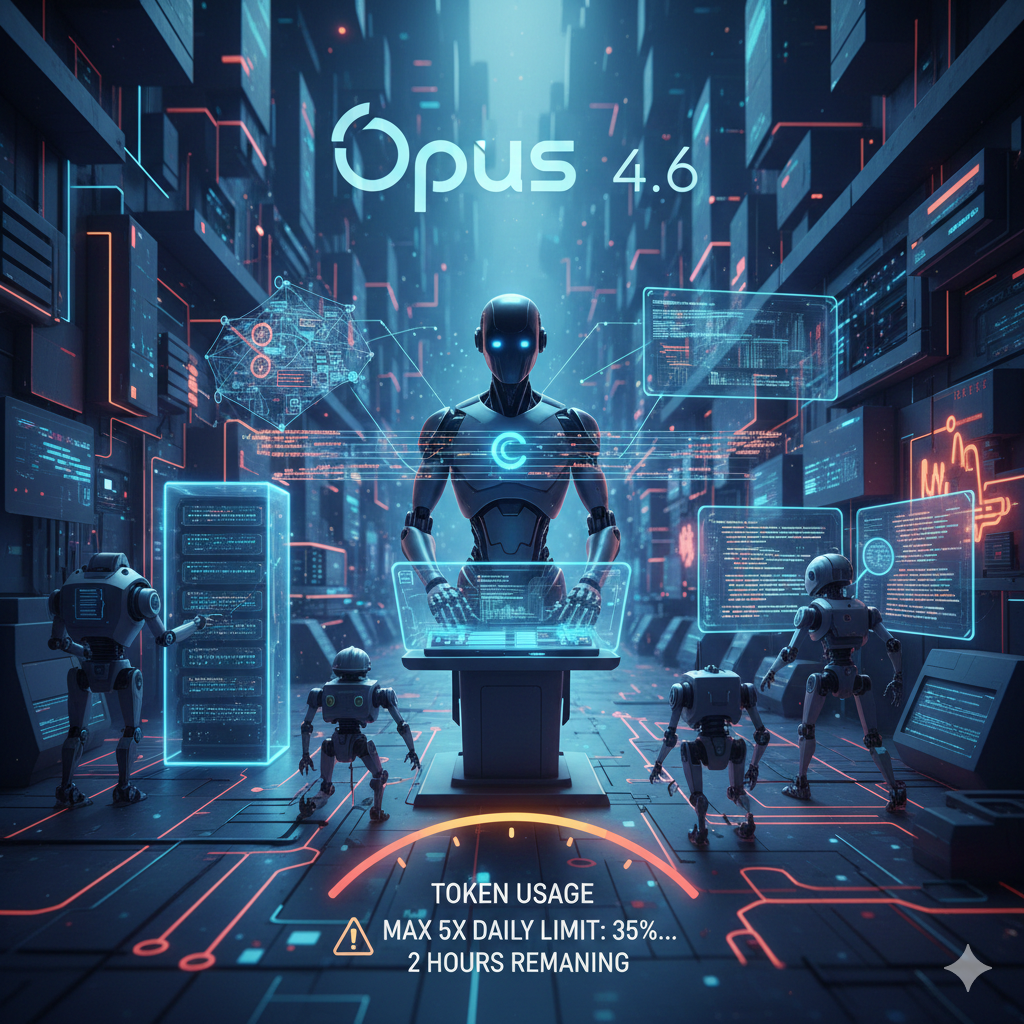
I’ve been using AI agents for a while now, trying to get them to work together without turning into a complete mess. I was using opencode (via ohmyopencode) for most of my orchestration, and it worked… until it didn’t.
The problem: every time one agent hands off to another, context just disappears. I’d be in the middle of a package migration, and suddenly agent B has no idea what agent A was doing. I ended up creating YAML files (which actually worked) just to keep track of what was happening.
What Changed with Agent Teams
Recently I switched to Claude Code Agent Teams with Opus 4.6, the difference is brutal. Instead of playing telephone between agents, they actually share context now.
Here’s what happens in practice:
The master agent actually writes prompts. Instead of just forwarding instructions, it crafts detailed prompts for each sub-agent. It’ll tell one agent “hey, focus on the common package, here’s what to look for, here’s the pattern we’re following.”
Everyone sees the same context. No more agents disagreeing or undoing each other’s work. They’re all working from the same information, so no more “wait, why did you delete what I just wrote?” moments.
Specialization that actually works. I split my agents by what they’re good at:
- One handles the
commonpackage only - Another deals with infrastructure
- A third checks if we’re following the patterns from already-migrated code
This is way better than one agent trying to understand everything and getting lost halfway through.
The Downside: This Thing Burns Through Credits
Opus 4.6 is expensive. REALLY expensive.
If you’re on the standard Pro plan, you’ll probably hit your limit before you even finish setting things up. I’m not joking.
Last time I used this for a migration:
- Burned through 35% of my daily limit (and I’m on Max 5x) just setting up the prompts
- Used up the entire session in about 2 hours
So yeah, watch your usage dashboard.
When to Actually Use This
My rule:
Daily work? Use Sonnet. It’s fast, cheap, and good enough for most things.
Complex migrations or architecture work where losing context would be a disaster? That’s when I pull out Opus 4.6 with Agent Teams.
Is it worth the cost? For the right problems, absolutely. For everything else? Nah, save your credits.